
Doctor AI: How an AI Doctor Helps You Understand Symptoms (and When to See a Real One)
A doctor ai is a medical AI tool that helps you make sense of what your body is telling you — describe a symptom in plain words and get possible explanations, questions to ask, and a sense of how urgent it might be. According to Stanford HAI, AI is already woven into routine care through ambient scribes, patient intake forms, and clinical data analysis. Think of an ai doctor as a first step that helps you prepare for care, not replace it.
Used well, an ai doctor online can help you understand symptoms, decode a confusing lab result, translate medical jargon, and decide whether to book an appointment, wait, or seek urgent help — but it does not diagnose you, and it is not a substitute for a licensed physician.
Medical disclaimer: This article and any AI doctor tool provide general health information for educational purposes only. This is not medical advice and not a substitute for a licensed physician, diagnosis, or treatment. Always consult a qualified healthcare provider about your specific situation. In an emergency, call 911 (US) or your local emergency number. If you are in a mental-health crisis or thinking about suicide, call or text 988 (Suicide & Crisis Lifeline). Never delay seeking care because of something you read here or from an AI tool.
DoctorAI.company Medical Disclaimer

What Is an AI Doctor?
An AI doctor sits between a search engine and a clinic visit: it listens to your symptoms, asks clarifying questions, and turns the answer into something you can act on. The two sections below break down what it is and where its authority stops.
AI doctor, defined
An AI doctor — also called a personal AI doctor, medical AI, or AI health assistant — is software, usually built on a large language model (LLM) plus clinical rules, that converses with you about symptoms and health questions. It functions as a triage and understanding aid, not a licensed clinician. The value chain is simple:
- Understand what a symptom might mean
- Prepare questions for a real doctor
- Decode lab results and medical terms
- Decide when to seek care
Because it runs on conversational AI rather than a fixed decision tree, a doctor ai can follow up the way a nurse triage line would — asking about onset, severity, and related symptoms before it offers any possible explanation. That flexibility is also why the output has to be treated as a starting point for a real conversation with a clinician, not an end point.
What it can and cannot do
Framing the boundary clearly is what keeps an AI health assistant safe to use. The table below separates what a virtual health assistant is built for from what it has no authority to do.
| AI Doctor CAN | AI Doctor CANNOT |
|---|---|
| Explain what a symptom might mean | Perform a physical exam |
| List possible (not confirmed) causes | Order or interpret tests on its own authority |
| Translate lab results and medical jargon into plain English | Prescribe medication |
| Suggest questions to ask a real doctor | Give a definitive diagnosis |
Stanford HAI notes that AI is already threaded through the modern doctor visit — with over 350,000 mobile health apps now embedding some form of AI — but researchers there consistently frame the technology as assistance woven into care, not a replacement for the clinician delivering it.

How an AI Symptom Checker Works
An AI symptom checker turns a short description of how you feel into a ranked, structured list you can actually use. The flow is short by design, and getting a useful result depends on how you answer along the way.
- Describe your main symptom in plain language — what it feels like, where it is, and when it started.
- Answer the adaptive follow-up questions about age, duration, severity, and related symptoms.
- Be specific about onset and duration, and mention what makes the symptom better or worse.
- Don’t omit red-flag details, even ones that feel minor or embarrassing.
- Review the list of possible causes ranked by likelihood, along with a suggested next step — self-care, see a doctor soon, or seek urgent care.
- Treat the result as a set of hypotheses to raise with a clinician, not as a verdict.
Many AI-powered symptom assessment tools let you go through this flow for free and anonymously, without creating an account — which is convenient, but it makes the privacy caveats in the risks section below worth reading before you type in anything sensitive.
How Accurate Are AI Doctors and Symptom Checkers?
Diagnostic accuracy is the question people ask first about any doctor ai, and the honest answer is that it varies a lot by tool, condition, and how the study measured “correct.” The two subsections below separate the documented numbers from what they actually mean for you.
The honest numbers
A widely cited audit of 23 symptom checkers, published by Semigran and colleagues in BMJ 2015 and archived on NIH PMC, found the correct diagnosis was listed first in about 34% of cases and appeared somewhere in the top 20 results 58% of the time; appropriate triage advice ranged from 33% to 78% depending on the tool. Newer AI-based tools report improvement — Ubie, for example, reports a top-10 hit accuracy of around 71.6% in its own evaluation (medRxiv, 2024), which the study’s authors say outperformed the comparator symptom checkers tested and compared favorably with median physician accuracy (72.9%) on the same clinical vignettes.
| Study / Tool | What It Measured | Result |
|---|---|---|
| Semigran et al., BMJ 2015 (23 symptom checkers) | Correct diagnosis listed first | ~34% of cases |
| Same audit | Correct diagnosis somewhere in top 20 | ~58% of cases |
| Same audit | Appropriate triage advice | 33%–78%, varied by tool |
| Ubie, medRxiv 2024 | Top-10 hit accuracy | ~71.6% (outperformed comparator checkers; median physician accuracy was 72.9%) |
Some studies do show AI matching or exceeding clinicians on narrow imaging tasks — radiology, dermatology, ophthalmology — but those results describe specific, well-defined tasks, not a general claim that “AI diagnoses accurately.”
Why accuracy is not the whole story
A doctor ai can’t examine you, can be wrong on rare conditions it hasn’t seen much data for, and often works as a black box that doesn’t fully explain its own reasoning. The right response to these numbers is to use the output cautiously — as a prompt for discussion — rather than to trust a percentage as a guarantee. That caution is also why human oversight matters more than the headline accuracy figure, which is the subject of the next section.

Risks, Limits, and Privacy
Even a well-designed AI symptom checker carries real limitations, and health data brings its own set of risks that don’t apply to a typical chatbot conversation.
Key limitations
An AI doctor cannot perform a physical exam, tends to be weaker on rare or complex conditions, and reasons in ways that aren’t always transparent — the “black box” problem. Questions of liability and informed consent remain unresolved across the industry, and there is a real risk of both false reassurance and unnecessary anxiety depending on how a result is phrased. AI output should be reviewed by a human clinician before it drives any medical decision.
Privacy
Health data is sensitive, and how a tool handles it matters as much as how accurate it is. Look for services that state HIPAA compliance and publish a clear data policy; some offer anonymous, no-signup use specifically to reduce that risk. It’s also worth knowing that stripping obvious identifiers from your data isn’t the same as making it untraceable.
De-identification is not anonymization.
Nigam Shah, Stanford HAI
Read the privacy policy of any AI health assistant before you share details you wouldn’t want tied back to you, and prefer tools that let you ask questions without an account at all.
When to Skip AI and See a Real Doctor (Red Flags)
No AI symptom checker should be the thing standing between you and emergency care. The two lists below draw the line between “call 911 now” and “not an emergency, but still see a clinician.”
Emergency red flags — call 911 now
- Chest pain or pressure, or trouble breathing
- Signs of stroke — face drooping, arm weakness, speech difficulty (the FAST warning signs)
- Severe bleeding, sudden severe headache, or fainting
- Confusion or a severe allergic reaction
- Thoughts of self-harm
Do not use an AI tool to “double-check” a possible emergency. Call 911 (or your local emergency number) immediately. For a mental-health crisis, call or text 988 (Suicide & Crisis Lifeline) instead of typing symptoms into any chatbot.
See a doctor soon (not an emergency, but don’t rely on AI alone)
- Symptoms that persist or keep getting worse
- A high or persistent fever
- New lumps or unexplained weight loss
- Any symptom in an infant, an elderly person, someone pregnant, or someone immunocompromised
- Anything an AI symptom checker itself flags as “see a doctor”
MedlinePlus, the NIH’s consumer health resource, is a reliable place to cross-check general symptom information alongside — never instead of — a clinician’s judgment. Use the AI doctor to prepare for that visit, then actually book it.

Using an AI Doctor the Smart Way: Prepare for Your Real Visit
The highest-value use of a doctor ai has nothing to do with getting a diagnosis — it’s about walking into a real appointment better prepared.
Build a symptom timeline. Log when a symptom started, how it has changed, and what makes it better or worse, then hand that timeline to your physician instead of trying to recall it on the spot.
Generate a list of questions for your physician. An AI health assistant is good at turning a vague worry into three or four specific questions worth asking out loud during a short appointment.
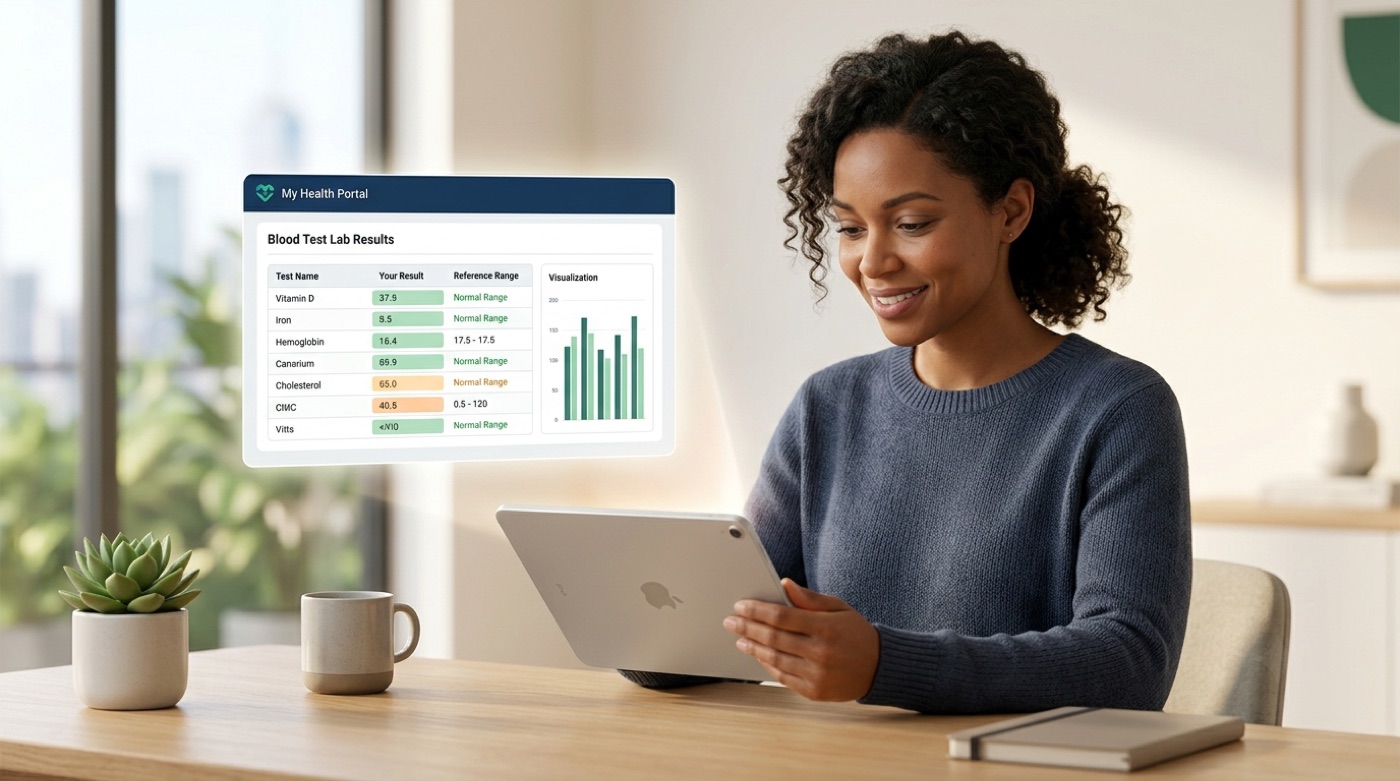
Decode a lab result or diagnosis term. Before or after a visit, use it to translate jargon on a report into plain English so you understand what a clinician is telling you, not to interpret the result on your own.
Clarify medication instructions. Ask it to restate dosing or interaction warnings in simpler terms, then confirm anything unclear with your pharmacist or doctor directly.
AI plus human doctor is the realistic model
The most useful way to think about this pairing is division of labor: the AI doctor handles information gathering and preparation, while the licensed physician provides the physical examination, clinical judgment, empathy, and the actual diagnosis and treatment plan. A 2023 review in PMC frames it the same way — AI in healthcare works best when it complements doctors and healthcare providers rather than replaces them. That collaboration, not substitution, is the model worth building your own habits around.
Frequently Asked Questions
- Can an AI doctor diagnose my condition?
No. It can suggest possible explanations and how urgent they may be, but a diagnosis requires a licensed physician who can examine you and order tests. Treat AI output as questions to raise, not answers.
- How accurate are AI symptom checkers?
It varies widely. Older checkers listed the correct diagnosis first in about a third of cases (BMJ 2015); newer AI tools report higher figures on their own benchmarks. Accuracy depends on the tool, the condition, and how clearly you describe symptoms — always verify with a clinician.
- Is it safe to use an AI doctor online?
For understanding symptoms and preparing for a visit, yes — as a supplement. It becomes unsafe if it delays real care in an emergency or if you treat its output as a diagnosis. Check privacy and HIPAA policies before sharing sensitive data.
- Can AI replace a real doctor?
No. Experts frame AI as complementing doctors, not replacing them — it lacks physical examination, accountability, and clinical judgment. Reviews of AI in healthcare consistently describe it as a tool that works best alongside physicians, not instead of them.
- When should I see a real doctor instead of using AI?
Any emergency (call 911), a mental-health crisis (call or text 988), symptoms that persist or worsen, or anything affecting infants, elderly, pregnant, or immunocompromised people. When in doubt, see a clinician.
- Is an AI doctor free?
Many AI symptom checkers offer a free tier; some are anonymous with no signup required. Connecting to a licensed human doctor — video visits, prescriptions, tests — usually costs money. Free AI guidance still is not a substitute for professional care.